

As a dietitian, I often encounter individuals who blame themselves entirely for their struggles with obesity. They feel that they should just be able to stop eating, and that their choices are what led them to this point. Whilst I agree, personal responsibility is a part of the equation, it’s crucial to understand that obesity is a complex condition influenced by a multitude of factors beyond individual control. The Foresight Report on Obesity, published in 2007, provides a comprehensive analysis of these factors, and explains why it isn’t just as simple as willpower or personal responsibility when it comes to weight loss.
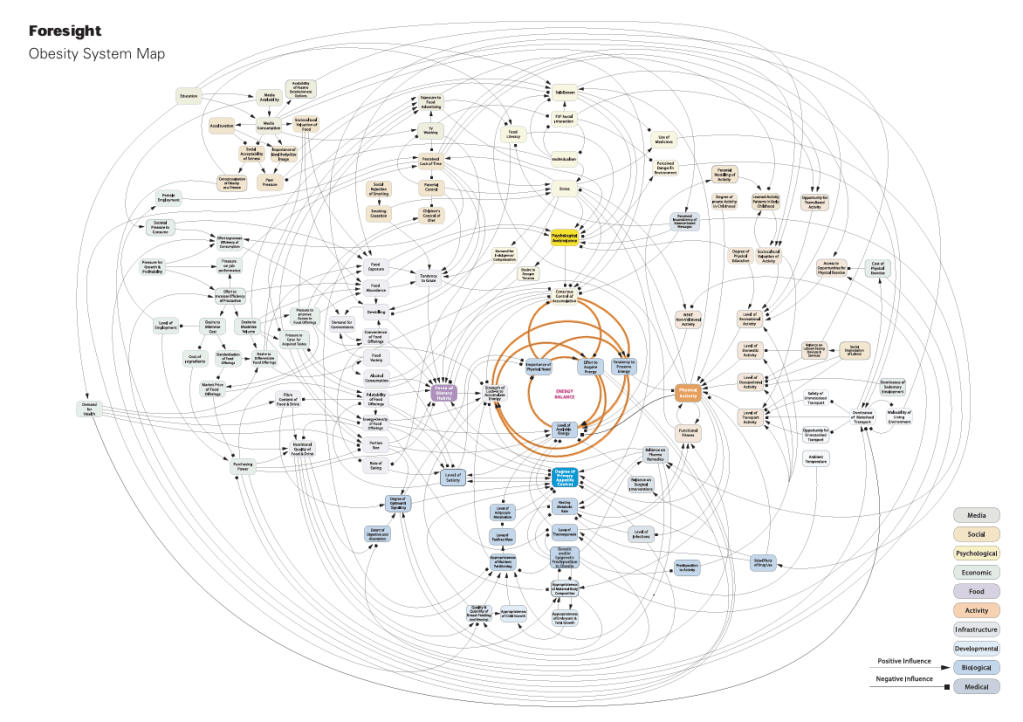
Above: the Foresight report obesity map, detailing the causes for obesity and how they link to one another.
The Obesogenic Environment
Our surroundings are one of our biggest influences on our behaviours and the choices we make when it comes to nutrition. From how we modelled our behaviour on peers and adults when we grew up, to the constant advertisements shoved down our throats and constant pressure to eat unhealthily, obesogenic environments play a key role in our nutrition behaviours.
- Food Environment: We are constantly bombarded with high-calorie, nutrient-poor foods that are cheap, convenient, and heavily marketed. Portion sizes have increased, and food cues are everywhere, stimulating eating even when we’re not hungry- think the adverts at bus stops and people eating delicious food on TV and social media. Resisting these temptations requires immense willpower and can be particularly challenging for individuals with a history of dieting or those who are food insecure.
- Built Environment: Many communities are designed with cars in mind, making it difficult and unsafe to walk or cycle. Lack of access to parks, playgrounds, and sports facilities can further limit opportunities for physical activity. Long working days exacerbate our inability to exercise, and considering many individuals work in a sedentary job, like in an office, many people struggle with managing their weight.
- Socioeconomic Factors: Lower socioeconomic status is associated with a higher risk of obesity. This may be due to limited access to healthy foods, fewer opportunities for physical activity, and higher levels of stress, which can lead to comfort eating. As above, people who are more financially insecure may also be working long hours, affording less time to exercise or move.
Genetics and Epigenetics
Many people say “my whole family is fat, it’s in my genes”. There is a partial truth to this; whilst yes, you all grew up with your feet under the same table, learning the same food habits, there are certain genetic factors which can predispose you to gaining weight, particularly in an obesogenic environment.
- Gene-Environment Interactions: Certain genetic variants may make individuals more susceptible to obesity in an obesogenic environment. For example, genes that influence appetite, metabolism, or fat storage may predispose some people to gain weight more easily when exposed to high-calorie foods and sedentary lifestyles. This can make it harder to maintain a healthy weight, or lose weight if you need to.
- Epigenetics: This refers to changes in gene expression caused by environmental factors, rather than alterations in the genetic code itself. For instance, poor maternal nutrition during pregnancy can increase the risk of obesity in offspring, highlighting the importance of a healthy environment from the earliest stages of life. Equally, being unable to afford healthy foods can cause a down-regulation or up-regulation of certain genes, meaning that certain fat-losing genes can be switched off and certain fat-gaining genes can be switched on.
Psychological Factors
Our mental health and emotional well-being can significantly impact our eating behaviours and weight.
- Emotional Eating: Many people turn to food as a way to cope with stress, sadness, boredom, or other emotions. Emotional eating is a common coping mechanism, like how many people may turn to alcohol, gambling or drugs to cope, and often it is a very common coping mechanism because food is so readily available. It’s important to seek support and develop healthier ways to manage your emotions.
- Mental Health Conditions: Certain mental health conditions, such as depression and anxiety, can contribute to weight gain. This may be due to changes in appetite, decreased motivation to engage in physical activity, or the side effects of medication. Equally, an apathy towards food and nutrition can make you more likely to default to less nutritious, more calorific ways of eating to survive, which can perpetuate a worsening mental health state, causing a bit of a vicious cycle.
- Trauma and Adverse Childhood Experiences: Exposure to trauma and adverse childhood experiences can increase the risk of obesity. This may be due to changes in stress response systems, emotional eating, or the use of food as a source of comfort and safety.
The Complex Web of Causes
The Foresight Report highlights that the causes of obesity are not isolated but interconnected, forming a complex web. For instance, an individual’s genetic makeup may influence their food preferences, which are then shaped by the food environment. Their socioeconomic status can affect their access to healthy foods and opportunities for physical activity, while their psychological state can influence their eating behaviours.
We cannot blame one sole factor for being the cause to someones weight gain. All factors are connected, and I’ve only highlighted a few here; there are over 100 different factors which have been identified to impact an individuals weight. It is not solely a case of lack of willpower and desire to change which leads to a difficulty in managing weight.
As a dietitian, I believe it’s essential to approach obesity with compassion and understanding. While personal responsibility is a part of the equation, it’s crucial to recognise the multitude of factors beyond individual control that contribute to obesity. By acknowledging the complexity of this condition, we can begin to address it more effectively and support those who are struggling. If you’re living with obesity, please know that it’s not just your fault. It’s a complex condition influenced by a multitude of factors, and it’s important to seek support and care.

