
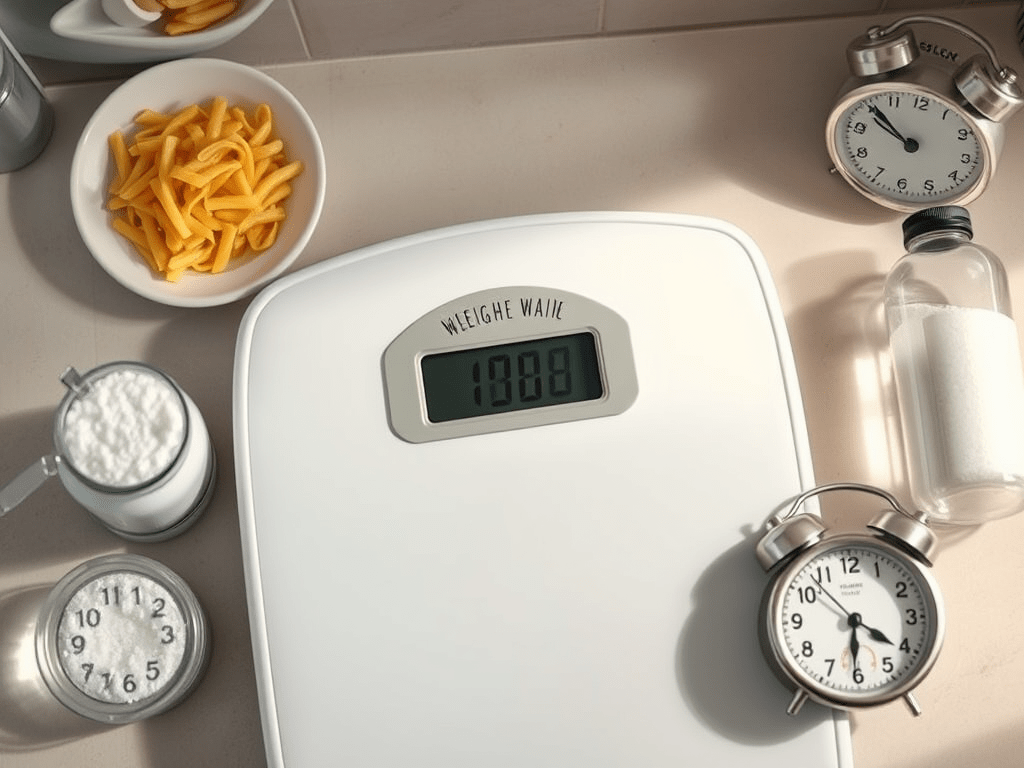
I’m sure you’ve been in this position before; you’ve been eating well all week. You’ve gone to the gym 5 times. You walked 10,000 steps every day. You step on that scale on a Sunday morning, and: +2lbs.
“What?! How can that have happened!! I might as well give up now!”
Look, I get it. It’s hugely demoralising when you’ve worked hard all week and seen the scale number increase. But, here’s the thing; your weight going up on the scale isn’t always due to you gaining fat. In fact, there are dozens of reasons why your weight can change but your fat mass hasn’t. Let’s talk about it.
1. You Ate Too Many Carbs the Day Before
Carbohydrates are stored in your muscles and liver as glycogen, and for every gram of glycogen stored, your body retains about 3 grams of water. If you had a carb-heavy meal the night before—think pasta, bread, or even a larger portion of rice—your body will hold onto extra water, temporarily increasing the number on the scale.
2. You Ate Too Much Salt the Day Before
A salty meal can lead to water retention as your body works to balance sodium levels. Excess sodium causes your body to hold onto water to dilute the concentration in your bloodstream, leading to bloating and a higher scale reading the next day.
3. You Drank Too Much Water the Day Before
Hydration is essential, but if you drank a lot of water close to weighing yourself, some of that fluid is still in your system. Water has weight, and chugging a big glass before stepping on the scale will show up as a temporary increase.
4. You Didn’t Drink Enough Water the Day Before
Ironically, dehydration can also cause water retention. When your body senses it isn’t getting enough fluids, it holds onto what it has, leading to a higher number on the scale. Staying consistently hydrated helps prevent this.
5. You Had Alcohol
Alcohol is dehydrating, which can trigger water retention as your body tries to compensate. It also slows digestion and can lead to bloating, both of which might reflect as a higher weight the next morning.
6. You Didn’t Sleep Well
Poor sleep disrupts hormones like cortisol (which manages stress and fluid balance) and can lead to water retention. Lack of sleep also affects digestion and recovery, potentially causing temporary weight fluctuations.
7. You’re Stressed
High stress increases cortisol, a hormone that can cause water retention and bloating. If you’ve been under pressure, your body might be holding onto extra fluid, making the scale creep up.
8. You’re Becoming Unwell
Inflammation from an oncoming cold, infection, or even allergies can cause water retention as your body fights off illness. This isn’t fat gain; just your immune system doing its job.
9. You’re at a Different Stage of Your Cycle
Hormonal fluctuations during the menstrual cycle lead to water retention, particularly in the days leading up to your period. Many women notice a weight increase of a few pounds during this time, which drops afterward.
10. You Haven’t Peed Today
If you weigh yourself first thing in the morning, your weight will be lower than later in the day simply because you’ve emptied your bladder. Holding onto urine means extra water weight on the scale.
11. You Haven’t Pooped Today
Digestive contents have weight. If you’re due for a bowel movement, that extra mass will show up on the scale. This is why some people prefer weighing themselves after their morning routine.
12. You Ate or Drank Before You Weighed
Even a small glass of water or a light breakfast adds weight. For the most consistent readings, weigh yourself first thing in the morning, after using the toilet and before eating or drinking.
13. You Weighed at a Different Time of the Day
Your weight naturally fluctuates throughout the day—it’s usually lowest in the morning and increases as you eat, drink, and go about your day. Comparing morning and evening weights isn’t helpful.
14. You’re Constipated
A sluggish digestive system means food and waste sit in your intestines longer, adding extra weight that isn’t fat. Increasing fibre, water, and movement can help.
15. You Did a Workout
Intense exercise, especially strength training, causes micro-tears in muscles, leading to inflammation and water retention as your body repairs itself. This is often called “exercise-induced water weight.”
16. You Wore Clothes to Weigh Yourself
Even light clothing adds weight. For the most accurate reading, weigh yourself naked or in minimal, consistent clothing each time.
17. You Weighed Yourself on a Different Part of the Floor
Uneven flooring or soft surfaces (like bathroom mats) can affect scale accuracy. Always place your scale on a hard, flat surface for consistent results.
18. The Battery in Your Scale Is Dying
Low battery power can cause digital scales to give erratic readings. If your weight seems unusually high or changes dramatically between weigh-ins, try replacing the battery.
How You Can Prevent The Scale Fluctuations Getting You Down
I often advocate for people to weigh themselves every day. Sounds crazy, I know. But we aren’t taking those values as gospel. Instead, each week, we look at the average of those weights. Even if you had a day which was higher in carbs or sodium, or where you didn’t sleep well, that often balances itself out when we complete an average.
Equally, using waist measurements or other measurements can be helpful in helping you see progress even if the scale doesn’t show it.
The Bottom Line
Daily weight fluctuations are normal and rarely reflect true fat gain. Instead of fixating on the number, focus on long-term trends, how your clothes fit, and how you feel. If you’re eating well, staying active, and managing stress, trust the process; the scale is just one small piece of the puzzle.
If you find yourself obsessing over daily changes, consider weighing yourself less frequently or using other progress markers like measurements, photos, or strength improvements. Your worth is not defined by a number on the scale!
Need personalised advice? As a registered dietitian, I help clients navigate weight fluctuations and develop a healthy relationship with food and their bodies. Get in touch for evidence-based support.

