
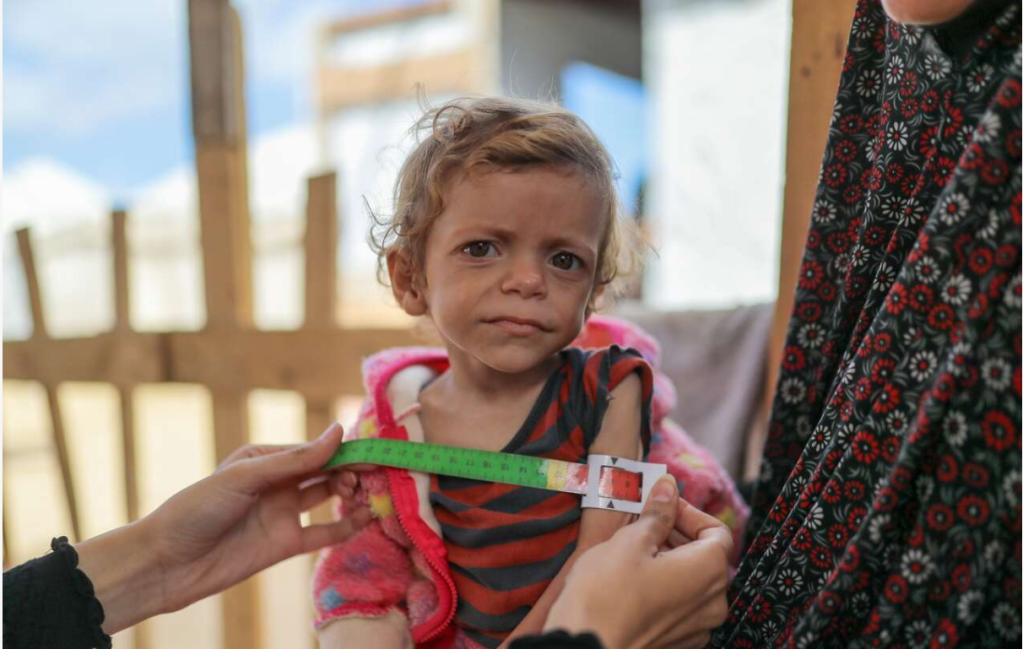
When a famine ends, many assume the suffering ends too. Food returns, plates are full again, and from the outside life seems to move on. But starvation does not simply vanish once meals resume. Its effects stay embedded in the body and mind, creating scars that last a lifetime.
The body never fully recovers
For children, starvation steals growth. Height is stunted, puberty is delayed, and bones and muscles never reach their full potential. Imagine watching your friends grow taller and stronger while your own body lags behind, not because of laziness or bad luck, but because you were once denied the food you needed to grow.
Even when food becomes plentiful again, the damage remains. Strength is permanently reduced, stamina stays low, and fatigue lingers every day. Imagine being constantly tired, unable to keep up at school, at work or even in play, because your muscles and bones never had the chance to develop fully.
The brain suffers too. Starved during crucial years, it develops with reduced volume. The result is long-term memory problems, poor concentration and slower learning. Imagine sitting in class, staring at a page, and realising you cannot hold information the way others can—because famine stole that ability from you as a child.
A broken relationship with food
Starvation does not just harm the body—it rewires the mind. Survivors often live with deep anxiety around food, haunted by the memory of scarcity. Eating disorders become common: binge eating when food is available, anorexia through fear of losing control, or comfort eating as a way to cope with lingering trauma.
Imagine being surrounded by food yet never feeling safe. Every meal brings questions: Will this last? Will tomorrow be the same? Food is no longer just nourishment—it is tangled with fear and survival.
Eating becomes painful
Even when food is available again, eating can hurt. The gastrointestinal system, slowed and weakened for so long, struggles to cope. Bloating, cramps, constipation and diarrhoea become everyday realities.
And starvation leaves more hidden damage. A little-known consequence is type 5 diabetes. During starvation, the pancreas weakens and loses its ability to produce insulin. Even when meals return, this damage often does not heal. Imagine finally being able to eat again, only to find your body can no longer manage blood sugar, leaving you permanently unwell.
Permanent damage to the heart and immune system
Starvation doesn’t just destroy the pancreas—it wears away at the heart. Lifelong arrhythmias, low blood pressure and unstable electrolytes become daily struggles. Imagine feeling your heart stutter and skip with no warning, a constant reminder of what hunger once did.
The immune system, too, never fully recovers. Wounds heal slowly, infections return again and again. Imagine catching a cold and watching it spiral into pneumonia because your body is still too weak to fight back.
The suffering does not end with food
Starvation is not solved the moment aid arrives or food markets reopen. Its shadow lingers. For those who have endured it, the damage can last forever: a weaker body, a foggier mind, a broken relationship with food, and the constant weight of trauma.
Imagine being told the famine is over—yet still feeling too weak to climb stairs, too foggy to study, too fearful to eat in peace.
That is why famine is not simply about hunger in the present. It is about a lifetime of stolen potential. Children who might have grown tall, strong and bright are left smaller, weaker and carrying invisible scars. Adults never regain their energy, their vitality or their health.
The world’s crises today
These futures are being written right now:
- In Gaza, catastrophic famine is unfolding. Children who survive will carry permanent damage to their growth, immune systems and brains for the rest of their lives.
- In Sudan, entire camps are already in famine. Mothers are watching babies waste away, and even those who live will grow up with lifelong health problems from the deprivation.
- In South Sudan, nearly 8 million people face severe food insecurity, meaning a generation of children risks growing up stunted and weakened.
- In Haiti, famine declared in 2024 continues to scar communities where children already show signs of malnutrition-related stunting and delayed development.
- In Yemen, nearly a decade of food shortages has left millions of children permanently undernourished, shaping a future of weakened bodies and fragile health.
- In Mali, attacks on farms and food routes leave thousands in famine. Every month without food deepens the irreversible damage.
Why we must never look away
Starvation is not just about the present—it is about robbing people of their future. Every child stunted, every immune system weakened, every mind fogged is proof that the damage of famine never truly ends.
Food is political. Nutrition is political. Starvation is political.
And until no child grows up with the permanent scars of famine, we cannot say we have done enough.
Photo Credit: Mohammad Abu Samra for the IRC
 Diets Debunked