Ahh, Joe Wicks. The internets favourite body coach who often means well, but can give rather questionable advice.
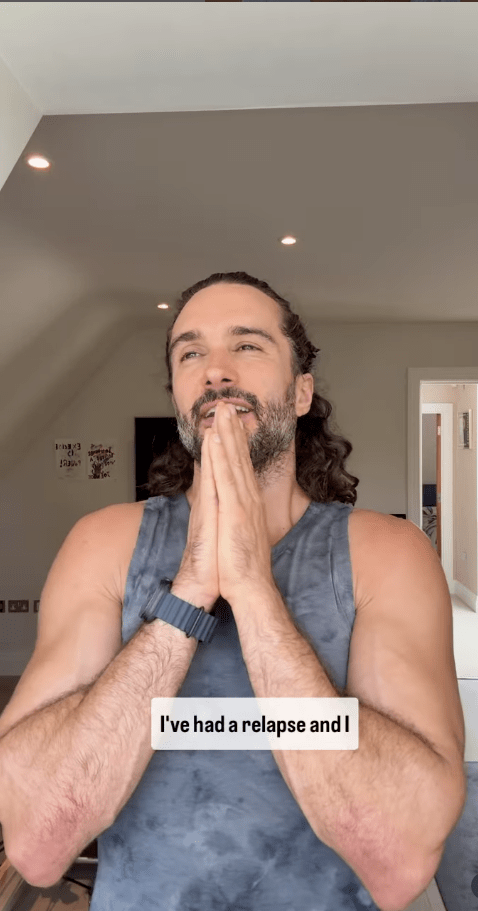
I’m sure you’ve seen his post a few weeks ago where he admits to “relapsing” on sugar, after having 10 weeks of a sugar-free diet. On one hand, I get it- he’s obviously very annoyed with himself for giving in to the Jaffa Cakes when he had been so perfect up until then. On the other hand, I think this shows to us the harm that the “perfect diet” ideal can cause.
Joe has 4.8M followers on Instagram at the time of writing this. He has numerous cook books, a huge number of paid partnerships, is a regular on daytime TV and many people, particularly those wanting to improve their health and relationship with food, look up to him. And don’t get me wrong- a lot of his advice has helped a lot of people, and has encouraged people to get active and eat better, something I am very pleased to see as a dietitian.
However, with this level of platform comes a level of responsibility, and it’s of my opinion that this video really missed the mark.
Joe’s primary audience is women, usually mums, aged between 30 and 60. These women have grown up in a society which demonises one nutrient or another at different times, in a society which has promoted restriction above all, in order to get to the desired level of skinniness that culture is perpetuating at the time. These women have had conflicting and extreme ideals about food and diet pushed to them on a daily basis for years, confusing their relationship with food, their relationship with their bodies, and their relationship with themselves in the process.
Telling these women that, firstly, you need to go on a completely sugar free lifestyle is an ideal which is unattainable for most and unrealistic to stick to for all is one thing. But to then put out a video describing the time that you ate sugar in similar terminology to a drug addict describing them consuming their drug of choice? Not cool, Joe.
But what does this video show us?
Really, it’s a prime example of the binge-restrict cycle. Removing foods from your diet completely, banning yourself from having them under every scenario, often leads to you having the “forbidden fruit” moment- where you can’t ignore your desire anymore, and you eat more than you ever would have done had you just given yourself permission to eat the food in smaller, more controlled quantities in the first place.
Removing foods completely from your diet is often not the answer. Yes, some people find that it works for certain foods. However, the way that Joe did this was not to remove a certain food from his diet- but rather to remove an entire nutrient and all foods that contain that macronutrient from his diet. He cut out essentially all foods which contain sugar, which wasn’t only the cakes, biscuits and sweets, but sauces, yoghurts, seasonings, salad dressings, basically anything which allowed convenience. This isn’t sustainable- nor is it necessary!
At the end of the day, there is a law of diminishing returns when it comes to nutrient consumption. For sugar, yes, eating less is better for us; but it gets to a point (around 25g of sugar per day), where eating less actually doesn’t do much for our health or wellbeing. We don’t need to be perfect.
Thankfully, I’m not alone in my thoughts- scroll through the comments on the video and you’ll see hundreds of people calling him out for this. Explaining how harmful these beliefs can be.



This is what we like to see- people being balanced in their thoughts and relationships with food, recognising that demonising an entire nutrient and avoiding it completely is not the way to go.
So, I hope Joe (and the millions that follow him) see this as a lesson; we don’t have to be perfect. In fact, it’s unrealistic and unsustainable to be perfect. We eat, on average, 3 times a day, every day, for our entire lives. That’s 87,600 meals for the average 80 year old. We can’t be perfect for every one. And it is unrealistic to expect to be.
 Diets Debunked