
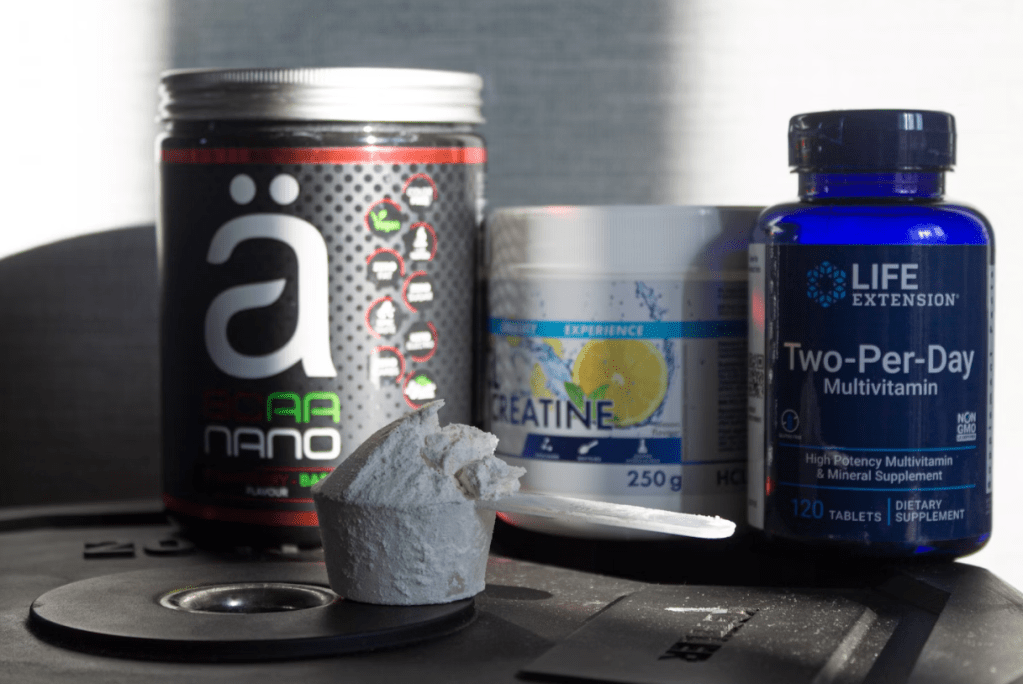
Creatine is a naturally occurring compound found especially in our muscles and brain. It helps rapidly regenerate a molecule called ATP, which is what your body creates from macronutrients like carbs, protein and fat to use for energy. Essentially, more creatine allows us to make ATP faster, which can have huge impacts on things like our athletic performance.
Essentially, we can enhance how quickly we can do something like running, how much weight we can lift, and how long we can exercise for because we can create more ATP.
Decades of research show that supplemental creatine reliably increases muscle strength and power, especially when paired with resistance training. Meta‑analyses show gains in one‑rep max bench press and squat, and even some improvements in lean muscle mass. Athletes, gym goers, and anyone looking to maintain strength as they age can really benefit from it as a supplement.
Beyond lifting weights though, creatine may also support cognitive performance. A few studies—particularly in people who are sleep deprived or under mental stress—suggest it can offer modest boosts in memory and reasoning. The evidence is not yet definitive but it is intriguing.
Who Stands to Benefit the Most?
- Strength Trainers and Athletes
If you are training for power, speed or muscle size, creatine is about as well‑supported as any supplement gets. - Older Adults
Sarcopenia, the age‑related loss of muscle, can be slowed when creatine is combined with resistance training. - People Under Mental or Physical Stress
There is early evidence that creatine might help sustain mental performance during sleep deprivation or when under cognitive demand.
Who Should Be Cautious?
Even though creatine is naturally occurring, there are a few groups of people who should really speak to their doctor before taking creatine. This is because creatine levels in the body are managed by the kidneys, and if your kidney’s don’t work properly, you might find it may make the issue worse. The people who need to speak with a doctor before taking creatine include:
- Those With Kidney Problems
Even though creatine is generally safe for healthy individuals, if you have diagnosed kidney disease or impaired renal function you should not take creatine before speak to your doctor. - Pregnant or Breastfeeding Women
There is not enough evidence yet to confirm safety in pregnancy or breastfeeding. It is safest to err on the side of caution. - Those Taking Certain Medications
If you are on drugs that affect kidney function or your hydration levels talk it over with a qualified healthcare professional before starting on creatine.
What the Typical Regimen Looks Like
Most people begin with a “loading” phase of around 20 grams a day split into 4 doses over 5 to 7 days. That saturates muscle stores quicker. Then you move to a “maintenance” dose of around 3 to 5 grams per day. That said you can forgo loading altogether and simply take 3 to 5 grams a day from the start. You will see similar results, just over a slightly longer timeline.
It’s important to stay hydrated when taking creatine. Creatine pulls water into muscle cells so ensure you are drinking enough fluid, especially if you are hammering it in the gym or in warmer conditions.
Common Myths, Debunked
- Myth: Creatine is a steroid
Truth is it’s a natural molecule found in our diet and produced by our own bodies. It is not anabolic in the traditional sense. - Myth: Creatine causes cramps, dehydration or kidney damage
Numerous studies have shown that in healthy individuals it does not increase risk of cramp or dehydration, and renal function remains normal even after years of consistent use. - Myth: You need a fancy brand
Plain creatine monohydrate is cheap, effective, and the most studied form of creatine. No need for special blends or gimmicks.
Creatine is one of the most researched supplements out there and the evidence supporting its safety and efficacy is rock solid — especially for strength, performance, and muscle gains. It might even offer cognitive perks when under stress. It is accessible, affordable, and easy to take. If you fall into one of the groups who should take medical advice first do that—otherwise, creatine could be a game‑changer in your training bag.
Want help picking a product or figuring out timing or diet stacking? Just say the word.
Photo Credit: UnSplash with thanks.
 Diets Debunked