

What is GLP-1?
GLP-1 stands for glucagon-like peptide-1. It’s a hormone naturally released in your gut when you eat, and it plays a huge role in regulating blood sugar, appetite and digestion. GLP-1 medications, like semaglutide (Ozempic, Wegovy), liraglutide (Saxenda, Victoza) and dulaglutide (Trulicity), mimic the effects of this hormone – only in much higher amounts, and with longer-lasting impact.
Why You Feel Less Hungry
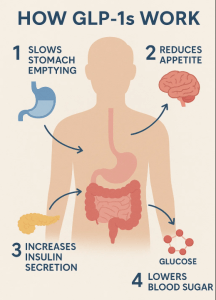
One of the most noticeable effects of GLP-1 drugs is reduced hunger. You might find you simply don’t fancy that big meal anymore, or your cravings for biscuits and takeaways seem to disappear. This is because GLP-1 directly affects the brain, particularly the hypothalamus, which regulates appetite. It helps you feel full sooner and stay full for longer.
But that’s not all. GLP-1 also blunts the brain’s reward system. In other words, that slice of cake or extra portion of chips just doesn’t seem as exciting anymore. It alters the way your brain responds to food cues, especially those high in sugar or fat. You’re not forcing yourself to eat less – your brain is genuinely less interested.
What’s Going On in Your Stomach?
Another important mechanism is something called delayed gastric emptying. GLP-1 slows down the rate at which food leaves your stomach. This has two major effects: it keeps you feeling full for longer, and it slows the absorption of glucose into your bloodstream, helping to prevent blood sugar spikes after meals.
This is especially helpful for people with type 2 diabetes. It’s also why people on these medications often find their portions shrinking without much effort. If your food is sitting in your stomach for longer, you don’t feel the urge to keep topping up.
Let’s Talk Hormones
GLP-1 isn’t working alone. It also changes the levels of other hormones involved in blood sugar and hunger control. For instance, it increases insulin secretion – but only when blood sugar is high, which means it doesn’t cause dangerous lows. It also suppresses glucagon, a hormone that usually raises blood sugar.
There’s also evidence GLP-1 medications may influence leptin (your satiety hormone) and ghrelin (your hunger hormone), amplifying that feeling of fullness even further. These hormonal changes are part of what makes the weight loss so sustainable for many people.
Why Do These Medications Make You Feel Sick?
Let’s address the not-so-fun part. Nausea is one of the most common side effects, especially in the early weeks. This is partly due to delayed gastric emptying, which can make you feel bloated or overly full. But it also has to do with the way GLP-1 affects the brainstem – the same area that triggers nausea and vomiting.
The good news? It usually gets better. Most people find their symptoms settle within a few weeks as their body adjusts. Starting with a low dose and increasing gradually can help your system get used to the medication more comfortably.
Why It All Works So Well Together
GLP-1 medications don’t work in isolation – their effects are tightly interlinked. The brain thinks differently about food. The stomach processes it more slowly. Hormones shift in a way that encourages stable blood sugar and reduced hunger. Even the nausea, while unpleasant, can reinforce the desire to avoid rich or heavy foods in the early stages.
It’s not just about willpower or discipline. These medications change the biology of hunger and fullness. For many, it’s the first time they’ve felt in control of their appetite without having to constantly fight cravings or overeat.
What to Know Before You Start
- They’re not magic. You still need to eat well and move your body. GLP-1 meds can support those changes, but they don’t replace them.
- The weight loss isn’t immediate. It builds slowly over time, which is actually a good thing for long-term health.
- Side effects are real. Nausea, constipation and fatigue are common at the start. Speak to your prescriber if they’re affecting your quality of life.
- These drugs aren’t suitable for everyone. They’re not recommended during pregnancy, for people with a history of pancreatitis, or for those with certain endocrine tumours.
The Bottom Line
GLP-1 medications offer a powerful new tool for tackling both type 2 diabetes and obesity. By acting on the gut, the brain and multiple hormones, they can shift the balance in favour of appetite control, better blood sugar and meaningful weight loss. They don’t work for everyone, and they’re not without side effects, but for many people, they’re a life-changing option backed by solid science.
If you’re considering GLP-1 treatment, speak to your GP or specialist. Understanding how these medications work can help you decide whether they’re the right fit – and if they are, how to make them work best for you.
 Diets Debunked