Let me ask you a question: Have you ever stressed over whether your diet was “perfect”? Maybe you’ve agonised over hitting every micronutrient target, avoided even a whiff of processed sugar, or felt guilty for not meal-prepping Instagram-worthy deliciously healthy meals every single day.
I sure have. Even as a dietitian, who knows better, I have been sucked into the trap of having a “perfect diet”, fretting that I am not doing something right and that I am going to embarrass myself as a nutrition professional by getting a diet-related disease at some point in my life. This worsened after my liver failure in 2023, which whilst nothing to do with diet and nutrition, was used against me by trolls online to show why I am not a good enough dietitian.
Over the past few years, I have been relearning these biases I held myself. Whilst I never projected them onto clients or let them effect my work, I did let them overwhelm me and my own relationship with food.
Throughout these past few years, I have worked hard to look at the research, understand the need for nutrition, and find out if we really have to have the perfect diet to make sure we aren’t going to get a dietary disease.
And I’m here to tell you something liberating: There’s no point having the perfect diet.
Not only is it exhausting, but the benefits shrink the more “perfect” you try to be. This is thanks to a little thing called the Law of Diminishing Returns—and it applies to nutrition just like it does to economics, fitness, and everything in between.
What Is the Law of Diminishing Returns and How Does It Apply to Nutrition?
In simple terms, the Law of Diminishing Returns states that after a certain point, putting in more effort gives you smaller and smaller benefits, to the point where there is no significant difference in outcomes.
Think of it like this:
- Eating zero vegetables → Adding some veggies = HUGE health boost!
- Eating 5 servings of veggies → Adding 5 more = Still good, but not as dramatic.
- Eating 10 servings of veggies → Adding 5 more = Now you’re just stressing over how to fit in 15 servings.
Another example:
- Eating 12% calories from saturated fat per day → Eating 10% calories from saturated fat per day = significant reduction in CVD risk
- Eating 10% calories from saturated fat per day → Eating 8% calories from saturated fat per day = still a reduction, but less significant.
- Eating 8% calories from saturated fat per day → Eating 6 % calories from saturated fat per day = no significant further reduction, but a lot harder to maintain.
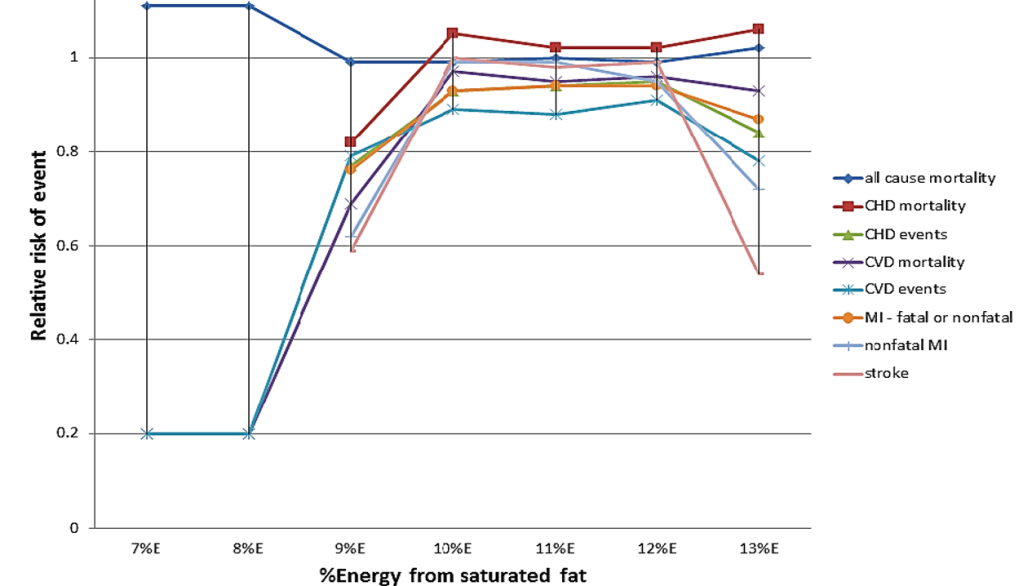
^ Hooper L et al (2015) Cochrane Database Syst Rev 6.
At some point, the extra effort doesn’t translate to meaningful gains. And worse; it might even backfire by making you miserable and being difficult to implement without serious stress and worry.
What Science Says
A 2022 study in The American Journal of Clinical Nutrition found that after meeting basic nutritional needs, additional dietary improvements had minimal impact on longevity. Similarly, research in Appetite (2018) showed that rigid, “perfect” eating habits were linked to higher stress and lower diet adherence.
In other words: good enough is often better than perfect.
Why Chasing a “Perfect Diet” is a Waste of Energy
1. Your Body Doesn’t Need Perfection
Your body is incredibly adaptive. It doesn’t need every gram of protein perfectly timed or every antioxidant accounted for. Most benefits come from the big wins:
✅ Eating enough protein & fibre
✅ Getting a variety of fruits & veggies
✅ Staying hydrated
✅ Reducing saturated fat and sugar intake, but not to nil
Beyond that? The returns diminish fast.
2. It’s Mentally Draining
Orthorexia (an unhealthy obsession with “clean” eating) is on the rise, and it’s no surprise. Trying to eat perfectly is exhausting! The mental energy spent tracking, restricting, and stressing could be better used elsewhere; like sleeping, moving, or just enjoying life.
3. It’s Unsustainable
Ever gone all-in on a super strict diet, only to burn out and binge later? Yeah, me too. The more rigid the diet, the harder it is to maintain. Flexibility = long-term success.
4. Food is More Than Nutrients
Food is culture, connection, and joy. If you’re so focused on “optimisation” that you can’t enjoy a slice of birthday cake or a pizza night with friends, you’re missing the point.
The 80/20 Rule: A Smarter Approach
Instead of chasing perfection, try the 80/20 Rule:
- 80% of the time: Eat nutrient-dense, wholesome foods.
- 20% of the time: Relax and enjoy life (yes, that includes dessert).
This keeps nutrition effective without being obsessive.
Final Thoughts: Ditch the Perfection, Keep the Progress
As a dietitian, my job isn’t to make you eat flawlessly; it’s to help you eat better while still living your life. The best diet is the one you can sustain without losing your sanity.
So next time you stress over whether your lunch was “clean” enough, remember: Nutrition follows the Law of Diminishing Returns. Do the basics well, enjoy the journey, and let go of the rest.
 Diets Debunked