
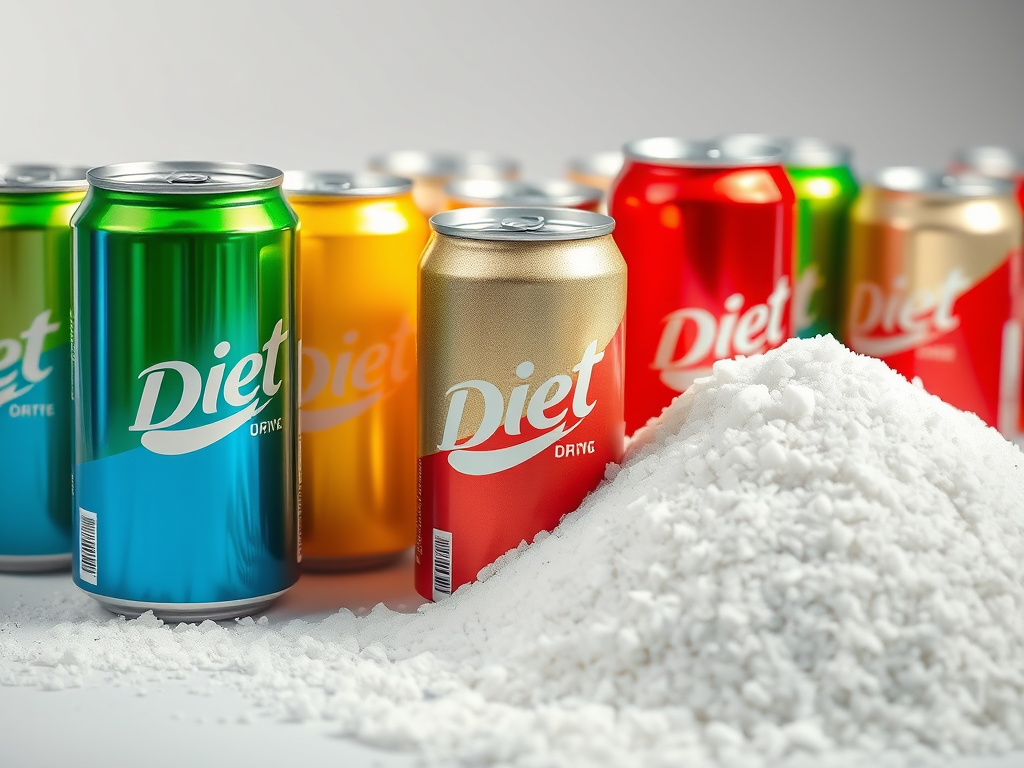
Like many food additives and man-made food products, aspartame has found itself on the social media chopping block over the past few years. You only have to log on to TikTok or Instagram to find hundreds of posts claiming that artificial sweeteners like aspartame cause a myriad of different conditions, from cancer to diabetes, from a poor gut microbiome to weight gain; but how much of this is actually true?
Let’s start with the big one: Cancer.
One of the most widely claimed reasons why aspartame is bad is cancer. These claims, originating from the Ramazzini Institutes studies into aspartame in 2006, essentially suggest that there is a strong link between aspartame consumption and cancer risk.
With regards to the strength of the evidence, looking at it on the face of it it may seem there is a link. The Ramazzini study, and many studies which have come after it, have shown a correlation between aspartame consumption and cancer which is dose-dependent, suggesting there is a link and therefore, a cause for concern. However, when you dive deeper, you realise the following:
- These studies have been done on rats, mice and other rodents, many of which have been bred to be pre-disposed to certain cancers, specifically, the cancers seen in these studies.
- The dosages of aspartame were given on an assumed basis; the scientists assumed that the mice would eat around 20g of feed per day, and so they dosed the feed with the appropriate amount of aspartame; however, by their own admission, there was a significant difference between the amount the rats ate when given the sweetener vs not.
- The statistical significance of cancer rates occurred at 400ppm (equivalent of 20mg/kg BW/day- about half of the current European Food Safety Authorities recommendation of a max of 40mg/kg BW/day), HOWEVER if you look at the data, the total number of tumours seen in the animals being fed no aspartame vs 400ppm equivalent is actually more (39.3 total tumours for no aspartame vs 34.7 total tumours for 400ppm aspartame per 100 animals). Equally, the larger dosage groups of 500, 2,500 and 5,000 mg/kg BW/ d had less animals within them, so although they do have a higher incidence of tumours per 100 animals, the group sizes were not equal.
This study definitely fuelled the fire of claims against aspartame, and since then, hundreds of different studies have occurred, with varying success and evidence to back them up.
Generally, what is seen is that only at dosages of 1,000mg/ kg BW/ day do we see consistent and strong correlations to increased cancer risk. This dosage is 25x higher than the EFSA’s 40mg/ kg BW/ d recommendation, which is the equivalent of about 16 cans of diet soft drink. The vast majority of people will consume perhaps 10-30% of that on a typical day. At that dosage, we do not see any correlation with cancer risk across any of the studies, rodent or human based.
But, what about the IARC’s classification?
The IARC, or International Agency for Research on Cancer, reported that aspartame was now considered a Class 2B carcinogen in 2023, much to the uproar of anyone on social media.
The issue is, most people do not understand the IARC classification and how they classify carcinogens.
| Classification | What it means |
| Group 1 | This group has substantial evidence to be confirmed as carcinogenic to humans. This means there is little doubt to the effect that this has on peoples risk of cancer. Things belonging in this group include alcohol, coal combustion, tobacco, processed meats and radiation. This classification does not identify to the rate of which these things will give you cancer (i.e. They don’t all increase your cancer risk the same amount). Merely, it suggests to us that these things will cause cancer if exposed to them enough. |
| Group 2A | Group 2A are compounds which will probably give us cancer, but there is insufficient evidence to classify them in Group 1. Effectively, more research needs to be undertaken before they can be reclassified. Foods, compounds and activities within this grouping include eating red meat, eating foods which have been fried at high temperatures, being a hairdresser or a barber or being a night-shift worker. |
| Group 2B | Group 2B refers to things which will possibly give you cancer. Essentially, if a compound, food or activity has had research done on it in the past where cancer incidence has been increased, it will be put here, even if that evidence or research is not strong or well controlled. Aspartame is here, alongside caffeic acid (found in coffee), progestins (found in female birth control) and jobs such as dry cleaning, carpentry and firefighting. |
| Group 3 | This group refers to compounds where there is no evidence that they cause cancer. This group includes drinking coffee and tea (despite caffeic acid being in group 2B!) |
As we can see from the table, something being in group 2b does not make it carcinogenic; rather, it just indicates that there has been some research which has found a small link between cancer and the compound, irrespective of the strength of that research. It should not be used as a “Gotcha!!” to suggest that aspartame causes cancer.
But, how about aspartames effect on blood sugar?
This claim genuinely baffles me, because in order to prove or disprove it, we would just have to look at those who regularly consume aspartame specifically for the fact that it doesn’t rise blood sugar levels; people with diabetes.
Many diabetics have a story where they drank what they thought was a sugar free drink, only to test the drink and see that it did in fact contain sugar, and sent their blood sugars sky high. When they do drink the sugar-free, aspartame laced varieties, what do you know? Their blood sugars stay level and don’t spike. This has been proved in numerous studies- the glycaemic index (the amount a compound spikes your blood sugar in comparison to table sugar) of aspartame is 0, showing that it will not have an effect on your blood glucose.
But what about insulin secretion?
Again, I have seen numerous people online claim that aspartame will increase the rate of insulin secretion within the body. This, like the sugar spiking, can be proven false by watching literally anyone drink a diet drink with no other food or carbohydrate. If it was true that aspartame causes an insulin spike, then people who drank diet sodas without any form of carbohydrate would end up having a hypoglycaemic event, which can cause confusion, shaking, sweats, unconciousness, coma and death. Considering that this doesn’t happen, I think it is safe to say aspartame doesn’t spike your insulin levels.
Where this idea might be getting confused from is the self reported increase in sugar cravings when drinking a lot of aspartame-sweetened beverages. Now, this isn’t confirmed within studies, but anecdotally, some report having an increase in cravings.
Aspartame causes weight gain, though!
Some studies suggest that consuming aspartame can cause an increase in weight gain, with data from self-reported and observational studies showing that people who ate more aspartame had a higher BMI than those who ate less.
There are a few issues with these studies; firstly, it being a self reported diet history means that there may not be accuracy in the amount of aspartame-containing foods being reported vs what was actually consumed.
Equally, many of these studies do not consider other variables which could lead to changes in weight. What was the rest of their diet like? Did they exercise a lot? Did they do night-shifts, or have a busy working pattern? Was their job manual or desk based? Did they have a lot of stressors in their life?
All of these mean that, whilst an interesting observation, we cannot associate correlation with causation.
Other studies which were more controlled showed no association between aspartame and weight gain at worst, and a small weight loss at best.
The likelihood is, the correlation seen between those drinking diet drinks containing aspartame and weight gain is that these individuals are more likely to have other unhealthy dietary habits. As an example, people were more likely to drink a diet soda when getting a fast food takeaway or a meal deal, both of which are high calorie and low nutrition. Those who drink diet sodas independent of this and sparingly don’t appear to have the same impact.
Ok, well it affects your microbiome!!
Now this there is some evidence for. Studies do show that people who regularly consume aspartame will have alterations in their gut microbiota, although the changes vary from study to study, and again, the quality of some of the studies can be questionable, with a lack of appropriate controls.
What we do need to consider here, however, is what that aspartame is replacing and the impact of that on the microbiome. As most people will be consuming a small amount of aspartame to replace a large amount of sugar, we need to look at the impact of a high sugar diet on the microbiome diversity and number.
What we do see is that sugar has;
- Far more evidence (and strong evidence at that) behind it on it’s impact on the microbiome.
- More conclusive evidence of negative impacts on bacterial diversity and richness (for example, increases in Proteobacteria and decreases in Bacteroidetes), as well as an increased risk of colonising harmful and pathogenic bacteria.
- Higher impacts of negative effects on the gut bacteria in comparison to aspartame.
So really, what we need to do is compare the alternative to what it is replacing. People aren’t eating aspartame just because; they are eating it because they wish to reduce their sugar consumption, and they would have eaten the full sugar version at that point if the aspartame-sweetened version was not available. So, if we are comparing the two, aspartame has much less of a negative effect on the microbiome than sweeteners.
Would it be best not to have the aspartame or sugar at all? Probably, yes. But that is not realistic for 99% of people. And so, we reach for the best thing out of the two; the aspartame.
To conclude
Aspartame, like seed oils and caregeenan before it, is seen as something which is harmful, toxic, and will kill you if you’re not careful. The reality is though, as long as you aren’t having gallons of aspartame-sweetened drinks per day, there are little negative effects, especially when comparing to the thing you’re trying to avoid consuming; the sugar. 1 or 2 cans of diet coke per day aren’t going to kill you. Perhaps, though, if you’re drinking 16 cans +, you may want to cut down to be within the safe upper limit.
 Diets Debunked