
You’ve probably heard the phrase “you just need to eat balanced!” as an answer to all of the questions around health, weight loss and good nutrition. This, however, is easier said than done, when you don’t know what “balance” actually looks like.

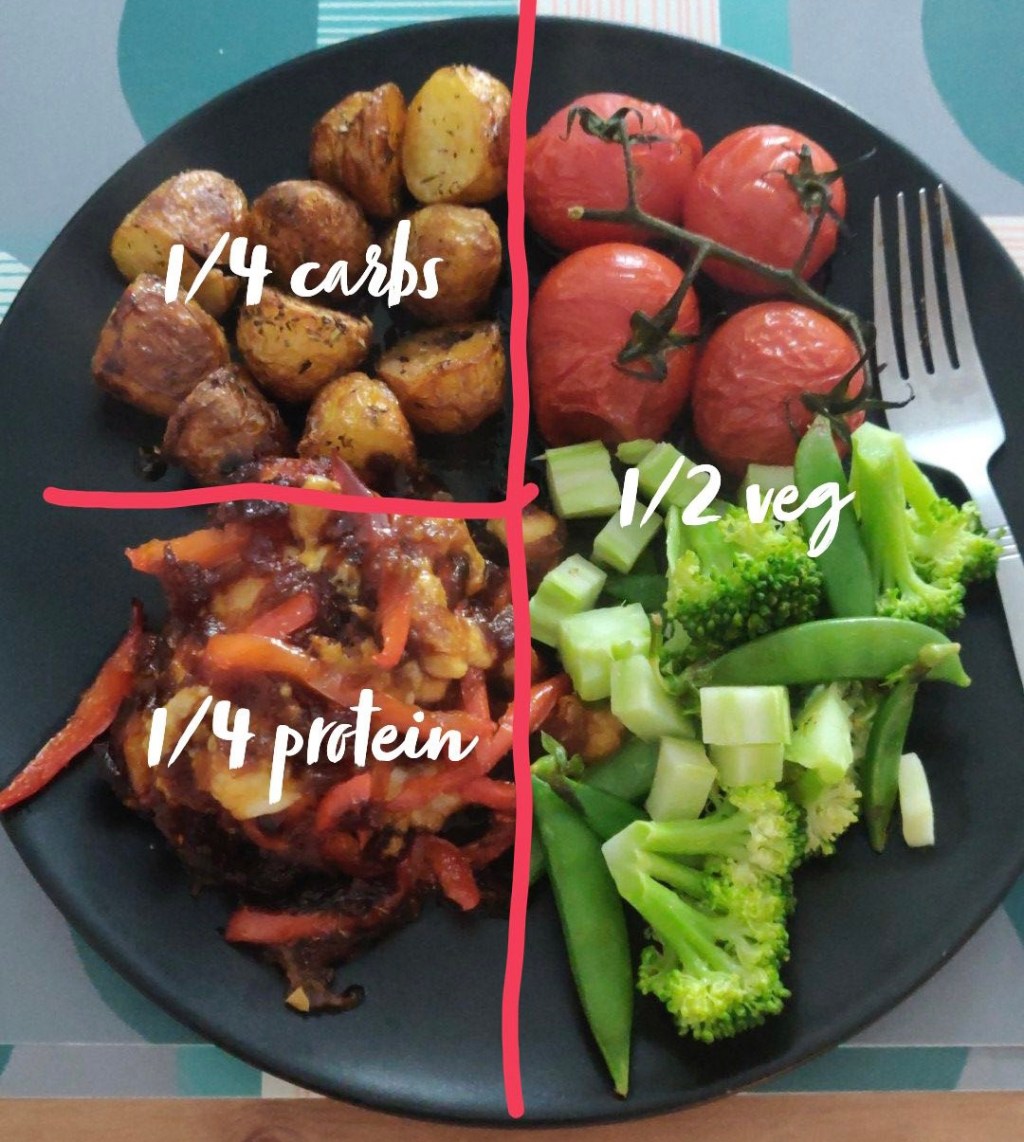
Typically, when we refer to balance, we are talking about the balance of carbs, protein, fat and fibre on the plate. This example above has caramelised onion, goats cheese and red pepper chicken, roasted new potatoes and mixed steamed veg. It follows the 1/2, 1/4, 1/4 rule.
- Half of the plate should be vegetables (or fruit, if appropriate for the meal). This provides fibre and micronutrients in abundant quantities, and as these are less calorie dense, can help support a healthy weight.
- Quarter of the plate should be a protein source. This provides essential amino acids needed for muscle growth and function, as well as some micronutrients that are difficult to get elsewhere, such as iron, iodine and calcium. This can include animal based proteins such as meat, fish, eggs and dairy, or can be vegan sources such as beans, lentils, tofu, tempeh, TVP or Quorn. Protein also helps keep us fuller for longer, which can help with your appetite or cravings.
- Quarter of the plate should be a carb. Whilst this isn’t totally necessary, as we can get the nutrients from carbs elsewhere, carbs provide us with a good energy source and additional fibre, and most people feel they perform better with some form of carb in their diet. Ideally, these should be high fibre carbs like potatoes, ancient grains, brown bread, rice or pasta. If you prefer to have less carbs, you can increase the protein or vegetables.
You may be wondering where the fat is in this meal, and that is a very valid concern. Fats are essential, after all, and we need to make sure we are eating healthy fats throughout the day for optimal health.
Fat sources tend to be added to the other components of a dish. Think about it; you very rarely eat fat by itself (such as a slab of butter or a glass of oil), but you might cook your potatoes in oil, or add some butter to your bread. Equally, fats can be found within the foods themselves; oily fish or avocados would be a great example of a protein or a vegetable which has fat. Equally, a sprinkle of nuts on your breakfast would be sufficient, and so they don’t need a dedicated “portion” on the plate.
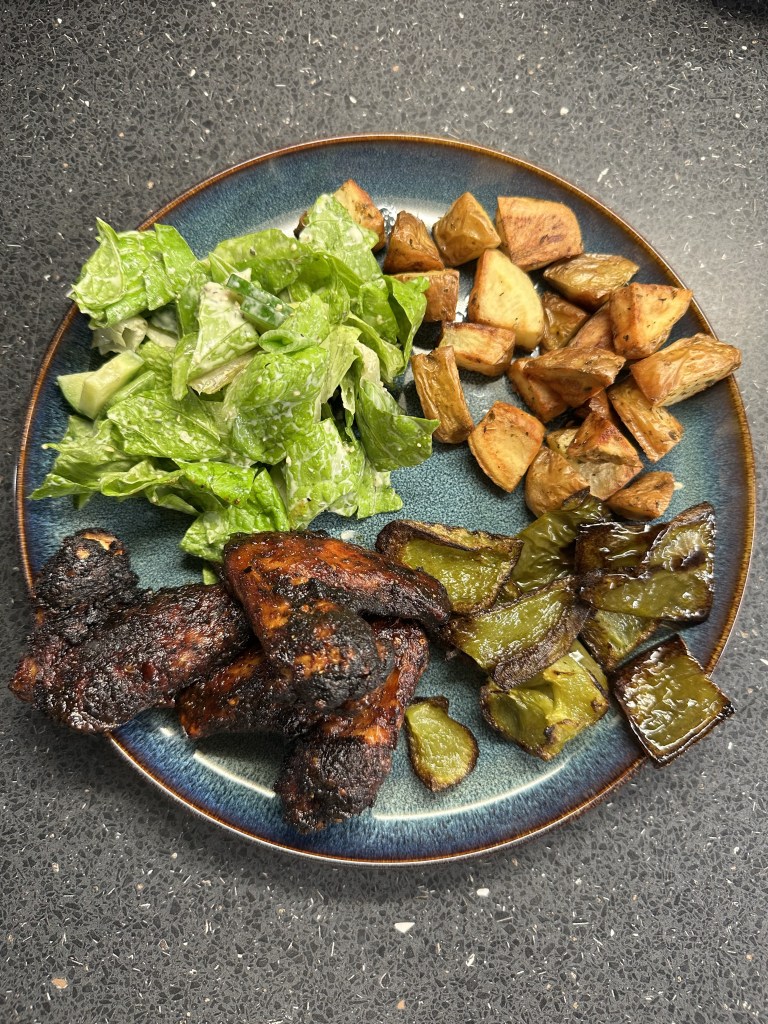
You’ve probably seen photos like this one when people refer to balance; this was one of my meals from last week, of chicken wings, roasted peppers, potatoes and salad. It’s pretty easy to see how this meal is balanced.
- Protein from the chicken wings, which makes up 1/4 of the plate.
- Fibre from the salad and the peppers, which makes up 1/2 of the plate.
- Carbs from the potatoes, which makes up 1/4 of the plate.
- Fat used to roast the peppers, in the salad dressing and from the chicken wings.
That’s great, isn’t it? It’s easy to see that this fits the 1/2 fibre, 1/4 protein and 1/4 carb rule which many people like to suggest you follow. But, in reality, our meals don’t always look like this, and they definitely aren’t as clear cut as this.

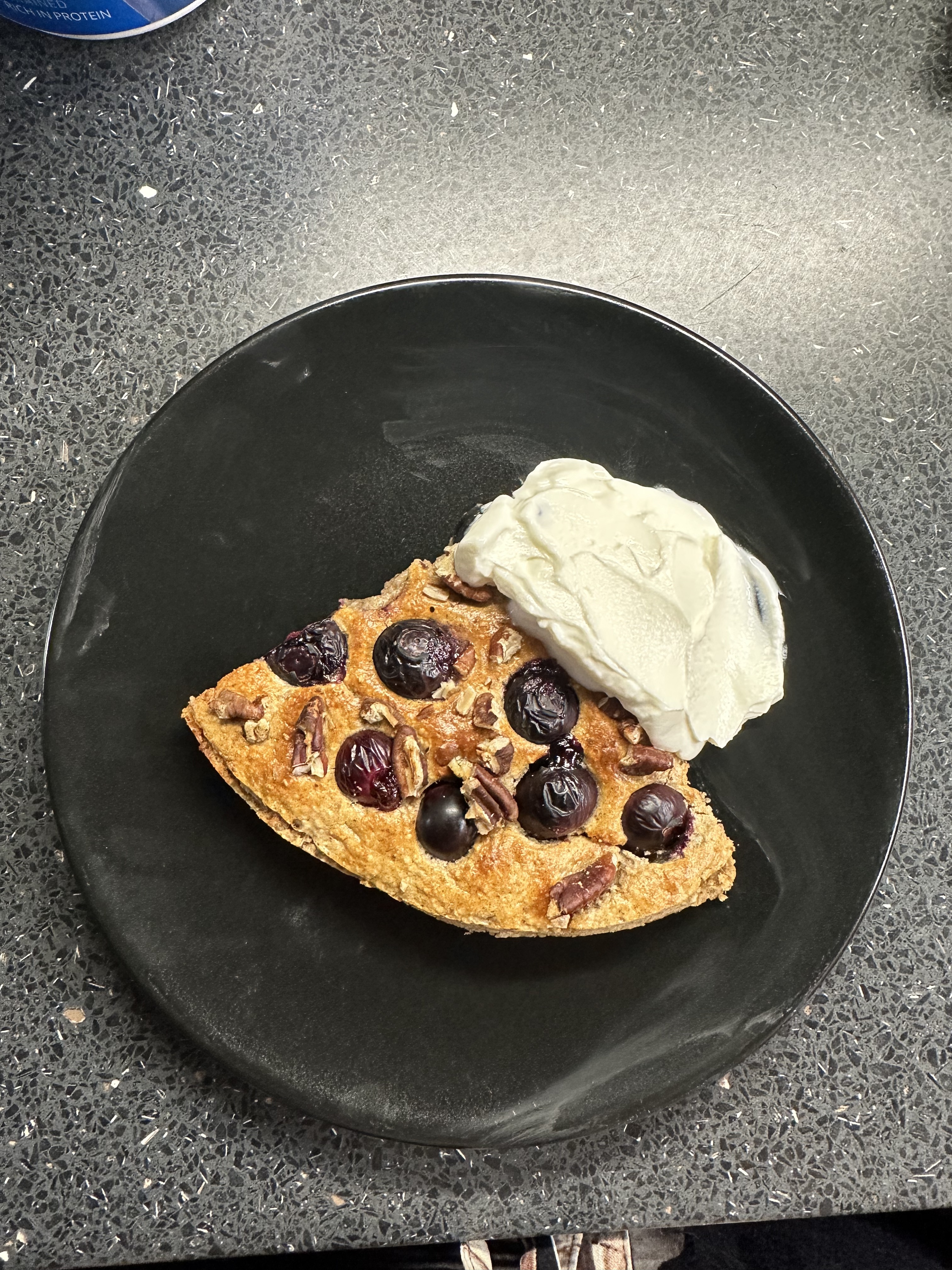
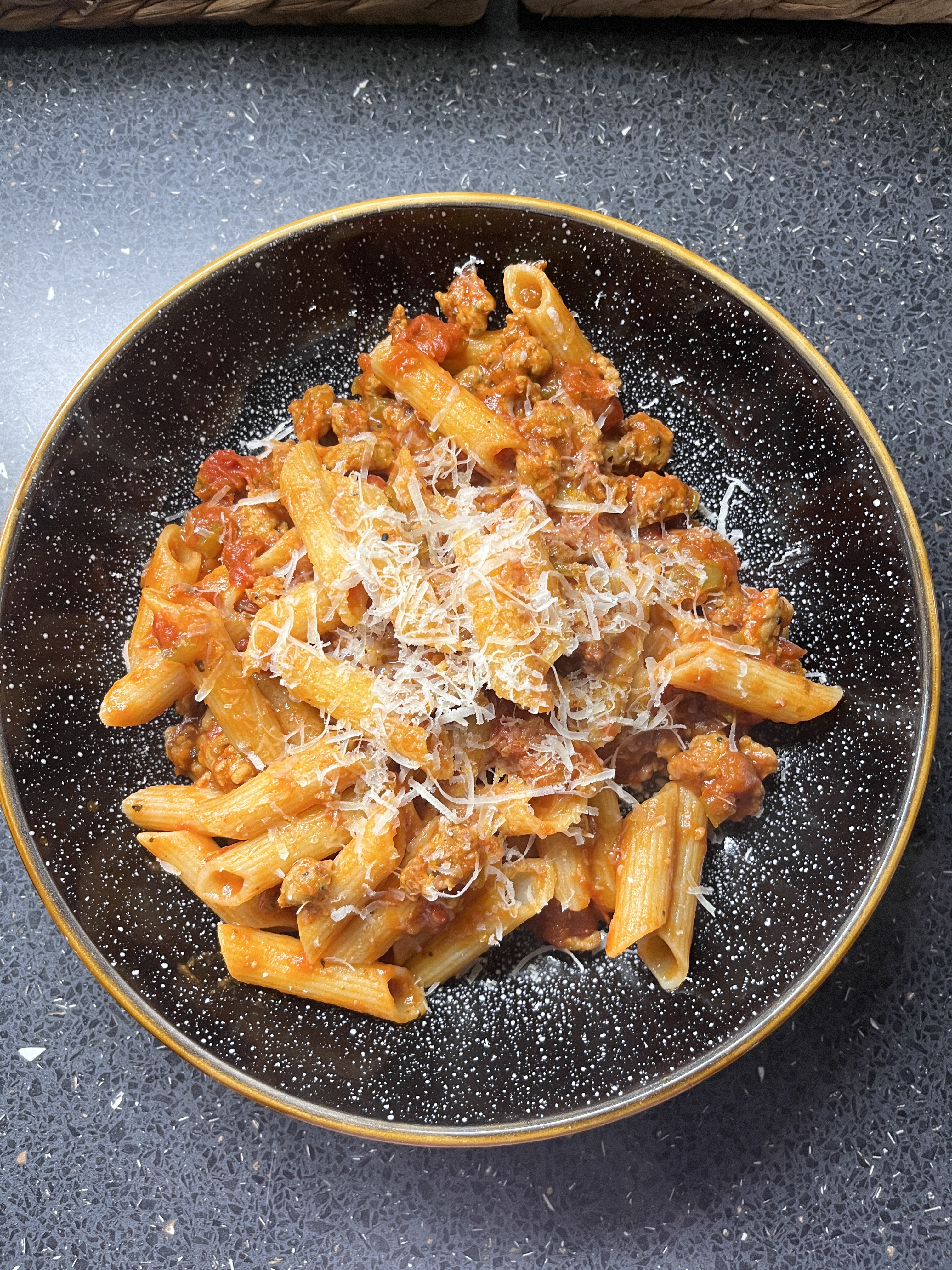


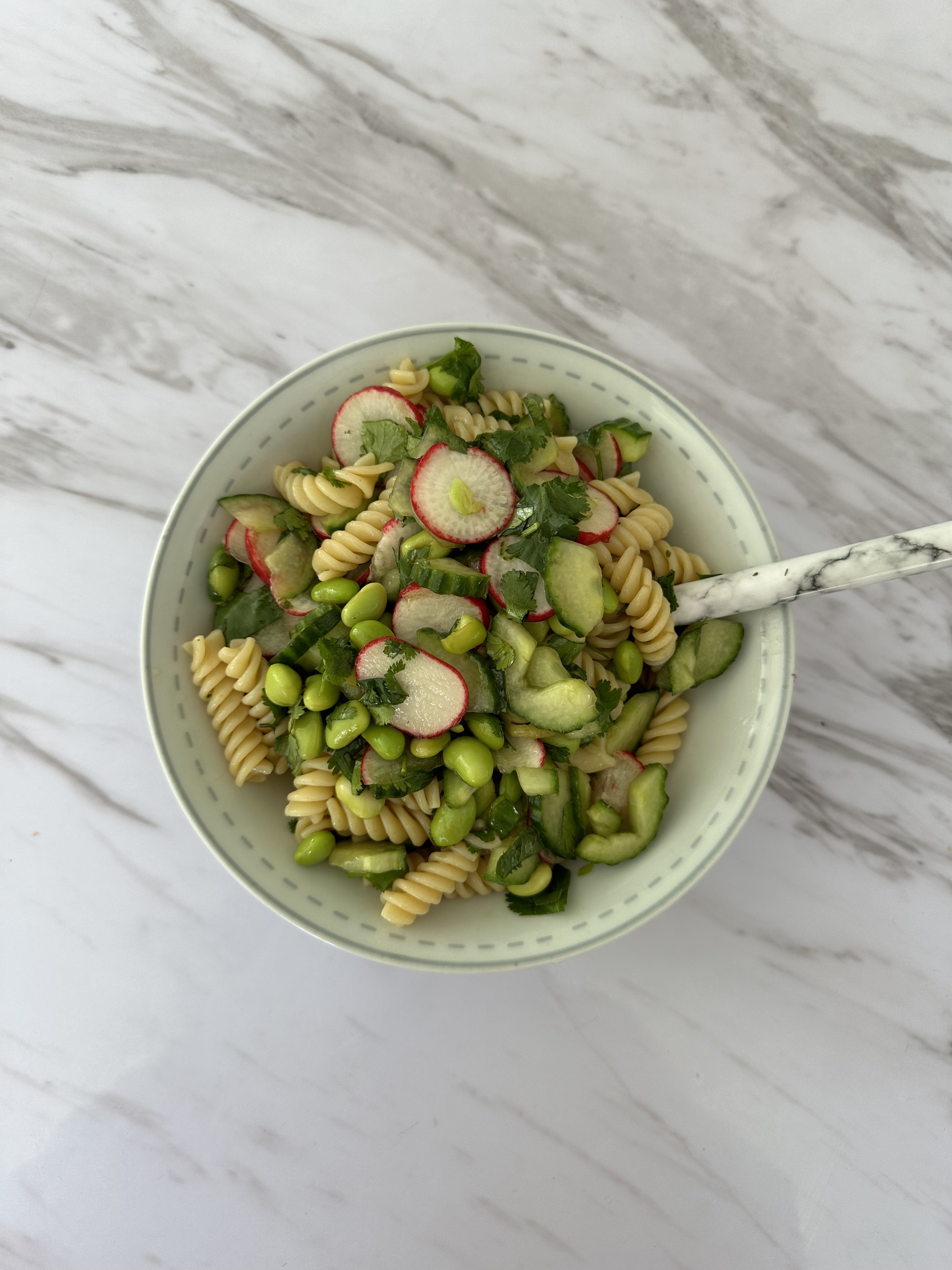

How would you go about identifying if a cottage pie, where all of the ingredients are cooked in the same pot, is balanced? How about some baked oats or pancakes with fruit and greek yoghurt? What about pasta meals where everything is combined?
The 1/2, 1/4, 1/4 rule is only really helpful when everything is set out on the plate as such, and for people who have mixed dishes, will be difficult to achieve otherwise.
All of the meals shown above are considered balanced meals and have the right proportion of fat, fibre, protein and carbs. But, how can you tell?
My philosophy when it comes to eating better
Ultimately, you need to be able to enjoy your food whilst also wanting to eat healthier. One of the easiest way to do this is to adapt the meals you are already eating to make them suit your goals better.
Take a lasagne for example; many lasagnes will be heavy on the meat and white sauce, and the vegetables or nutritional components of the meal will take more of a back seat.
The less accurate way
Reducing the amount of meat within the sauce, and adding in some additional servings of vegetables (such as another can of tomatoes, some more carrot/ onion/ celery/ mushrooms) can be a great way to easily adjust the proportions within that meal. This works really well for other meals where everything is mixed together; think a cottage pie or a meat and vegetable curry.
Increasing accuracy
Another great way to make sure the proportions are correct is to weigh the amount of vegetables used within the dish before cooking. If you are making a lasagne that feeds 4 portions, you need to make sure you have enough vegetables in there for 4 people. Typically, 1 portion of vegetables would be 80g; so, if you’d like to make sure your vegetable intake per portion is at least 2 portions, each person would need 160g vegetables. For the whole portion, that means you need a total vegetable weight of 640g. Don’t forget to include things like tinned tomatoes in your calculation! If you add a side salad or a side of steamed veggies, you can easily ensure your meal has 3 portions of veggies per serving.
Due to the additional volume of veggies, you’ll likely need less meat, cheese sauce or pasta, and therefore it makes your overall balance look more like the 1/2, 1/4, 1/4 rule discussed above.
What can I add to this to make it more balanced?
One of the key aspects I find helpful when trying to eat better is to ask myself what I can add to food to make it more balanced or more nutritious. This allows me to have a food that is delicious (such as the pancakes shown above!), but ensures it is more in line with healthy eating goals.

I like to ensure each meal I eat has at least 1 portion of protein, and at least 1 portion of fruit or vegetables. I also like to try and aim for a healthier carbohydrate option if I can. In the pancake example above, instead of having white flour pancakes with lemon and sugar (a childhood favourite!) I made some easy swaps.
- White flour pancake batter >>> wholemeal sourdough pancake batter
- Lemon sugar topping >>>> 10% fat Greek yoghurt with berry chia jam and strawberries.
This allows me to still have what I was craving (the pancakes), but improved the nutrition. The option I went for was instead higher fibre (due to the jam, berries and wholemeal batter), higher protein (additional egg in the batter + Greek yoghurt), and far higher in micronutrients, including calcium, iodine and antioxidants as well as omega-3’s.
Ultimately, you can improve your nutrition by thinking about what you can add to a meal. This mindset also helps if you are someone who has a ‘scarcity’ mindset; removing things from your diet may make you crave them more and ultimately cause overeating of them in the long term.
The idea of balance doesn’t have to be a complicated one. Adding, not subtracting, could be the key to helping you identify that balance in your meals.
 Diets Debunked